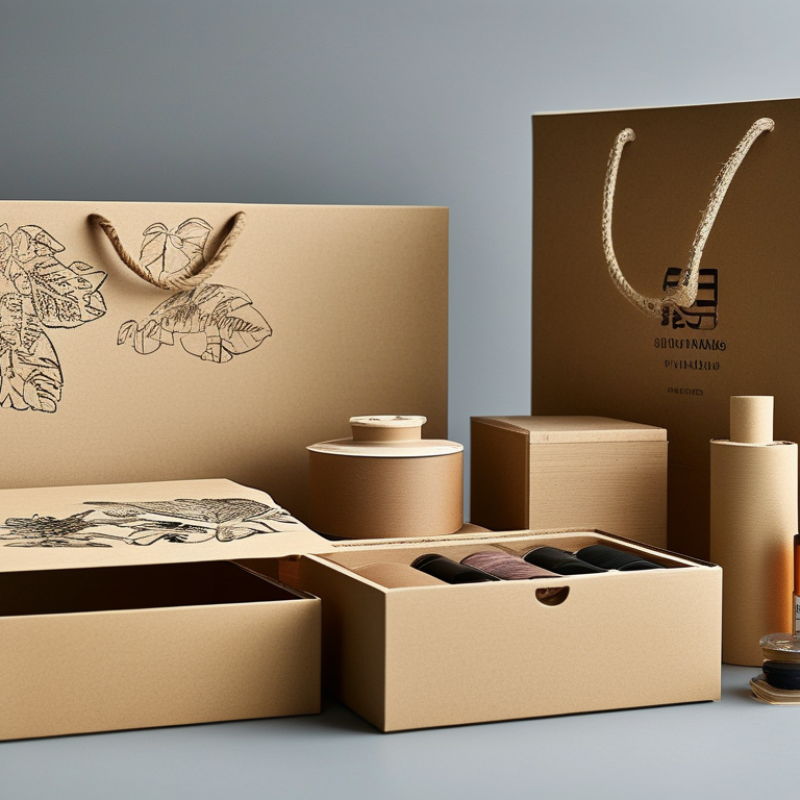
China Top 10 Luxury Sustainable Packaging Manufacturers

Luxury brands are rethinking packaging as carefully as they design the product inside. China has become an important manufacturing base for this shift. Its packaging suppliers combine precision molding, specialty papers, recycled materials, and increasingly traceable production systems. This article introduces China’s top 10 luxury sustainable packaging manufacturers, focusing on capabilities rather than attractive claims alone.

The market signals are strong. PwC’s 2024 Voice of the Consumer Survey reported that consumers were willing to pay an average premium of 9.7% for sustainably produced goods. McKinsey also found that 60% to 70% of surveyed consumers considered sustainability important when purchasing packaging. These findings support investment in luxury sustainable packaging, especially for cosmetics, spirits, jewelry, fashion, and premium gifting. Yet demand does not automatically prove environmental value. A heavier box may feel more luxurious, while creating additional transport emissions. A recycled finish may look convincing, but its actual content needs verification.

This selection considers material sourcing, production experience, customization, quality control, and environmental documentation. Relevant benchmarks include ISO 14021 for environmental claims and ISO 14040 and 14044 for life-cycle assessment principles. The Ellen MacArthur Foundation’s widely cited estimate that only 9% of plastic waste has been recycled globally also shows why material choices matter. Still, supplier data can be incomplete, inconsistent, or difficult to compare. No manufacturer is perfect. Buyers should request recycled-content evidence, test reports, factory certifications, and end-of-life guidance before approving a design. The best partner is not simply the one with the most elegant sample. It is the one that can explain every layer, process, and limitation.

China Top 10 Luxury Sustainable Packaging Manufacturers

Luxury Sustainable Packaging: Definition and Core Industry Standards

Luxury Sustainable Packaging: Definition and Core Industry Standards

Luxury sustainable packaging combines premium presentation with lower environmental impact across its full life cycle. It may use certified paper, recycled content, refillable structures, or lighter components. Appearance alone is not enough. A heavy rigid box can feel valuable, yet create unnecessary emissions during transport.

The Ellen MacArthur Foundation reported that only 14% of plastic packaging was collected for recycling globally. This figure exposes a practical weakness: recyclable design does not guarantee real recovery. Effective packaging should reduce material use, avoid difficult mixed layers, and support reuse or established recycling systems. The ISO 18601 series provides a useful framework for packaging optimization, material recovery, and life-cycle thinking. It encourages measurable decisions rather than attractive environmental claims.

Certification also matters. FSC chain-of-custody systems can verify responsible forest-based material sourcing, while recycled-content standards help confirm claimed inputs. Smithers’ sustainable packaging market research shows strong growth as regulations and consumer expectations reshape packaging development. However, market growth does not automatically mean better outcomes. Data should cover material weight, recycled content, transport volume, durability, and end-of-life performance.

Small details reveal quality. A paper insert should separate cleanly from a metal closure. Ink coverage should not block fiber recovery. Adhesive choice matters.

Some solutions remain imperfect. Refillable formats may require more transport and cleaning. Recycled materials may vary in color and surface smoothness. That is acceptable when the trade-off is measured honestly.

China Top 10 Luxury Sustainable Packaging Manufacturers Luxury Sustainable Packaging: Definition and Core Industry Standards
No. Assessment Dimension Verified Industry Requirement Applicable Standard or Certification Recommended Evidence for Manufacturer Evaluation
01 Environmental Management Establish, operate, maintain and continually improve an environmental management system covering environmental risks, compliance obligations, objectives and operational controls. ISO 14001:2015 Valid third-party certificate, defined environmental objectives, internal-audit records and corrective-action reports.
02 Greenhouse-Gas Accounting Quantify product or organizational greenhouse-gas emissions using transparent boundaries, activity data, emission factors and documented calculation procedures. ISO 14064-1
ISO 14067
Verified carbon footprint report, system boundary, emission-factor sources, energy data and independent verification statement.
03 Life-Cycle Assessment Evaluate environmental impacts across relevant life-cycle stages, including raw materials, manufacturing, transport, use and end-of-life treatment. ISO 14040
ISO 14044
Goal-and-scope document, life-cycle inventory, impact-assessment method, allocation rules and sensitivity analysis.
04 Responsible Paper and Board Sourcing Use paper or paperboard from controlled and traceable sources, with chain-of-custody procedures that preserve material claims through the supply chain. FSC Chain of Custody
PEFC Chain of Custody
Current chain-of-custody certificate, certified-material percentage, supplier records and product-claim authorization.
05 Recycled Material Content Declare pre-consumer or post-consumer recycled content using documented mass-balance calculations and supplier traceability. ISO 14021
GB/T 20861
Material declaration, recycled-content calculation, incoming inspection records and supplier certificates or test reports.
06 Recyclability and Material Compatibility Design packaging with separable components and materials that are compatible with available collection, sorting and recycling systems in the target market. GB/T 16716.1
ISO 18604
Bill of materials, component-separation instructions, recycling assessment, local infrastructure review and disposal guidance.
07 Packaging Reduction Optimize package weight and volume while preserving product protection, transport performance, functionality and premium presentation. ISO 18602
GB/T 16716.1
Before-and-after weight comparison, dimensional optimization study, protection testing and material-efficiency calculation.
08 Compostable or Biodegradable Claims Use biodegradability or compostability claims only when the material meets the applicable test conditions and the claim clearly identifies the required disposal environment. ISO 17088
EN 13432
Accredited laboratory test report, defined composting conditions, disintegration results and claim-substantiation documentation.
09 Chemical and Heavy-Metal Safety Control inks, coatings, adhesives and substrates to reduce restricted substances and prevent harmful chemical migration into the packed product or environment. GB 4806 Series
ISO 8124-3
Material safety data, restricted-substance declaration, migration testing where applicable and supplier chemical-management procedures.
10 Supply-Chain Transparency Maintain traceability for key raw materials, subcontracted processes, environmental data and social-compliance risks throughout the manufacturing chain. ISO 20400
GRI Standards
Approved-supplier list, traceability records, supplier-audit results, responsible-procurement policy and corrective-action tracking.
Reference framework: ISO 14001, ISO 14021, ISO 14040, ISO 14044, ISO 14064-1, ISO 14067, ISO 17088, ISO 18602, ISO 18604, ISO 20400, FSC Chain of Custody, PEFC Chain of Custody, GB/T 16716.1, GB/T 20861, GB 4806 series and EN 13432. Certification scope, test conditions and legal requirements should be verified for the specific product and target market.

China’s Market for Luxury Sustainable Packaging Manufacturing

China Top 10 Luxury Sustainable Packaging Manufacturers

China’s market for luxury sustainable packaging manufacturing is becoming more technical and selective. Buyers now examine materials, finishing quality, production records, and environmental data together. High-end packaging must feel refined without creating unnecessary material waste. This balance is difficult.

Manufacturers commonly work with certified paperboard, recycled fibers, molded pulp, glass, aluminum, and responsibly sourced wood. Material choice depends on product weight, moisture exposure, transport distance, and shelf presentation. Some factories use water-based coatings and low-impact inks to reduce chemical concerns. Others improve efficiency through digital sampling and automated cutting. Small details matter. A smooth paper texture, firm magnetic closure, or precise edge can change the customer’s perception.

Factory experience remains important. Experienced teams test compression strength, color consistency, abrasion resistance, and assembly accuracy before mass production. Independent audits can also review energy use, worker safety, waste handling, and supply-chain records. However, sustainable claims are not always complete. Recycled materials may vary between batches. Decorative finishes can weaken recyclability. Data may also cover one production stage, not the entire lifecycle. These limitations deserve honest discussion.

The strongest manufacturers provide traceable specifications, realistic lead times, and samples that match final production. They also help buyers compare reusable structures with lighter, simpler designs. Luxury does not always require more layers. Sometimes, better engineering delivers the same visual impact with less material. Progress is visible, but the market still needs clearer measurement and more disciplined reporting.

Criteria for Ranking the Top 10 Chinese Manufacturers

China Top 10 Luxury Sustainable Packaging Manufacturers

Ranking China’s leading luxury sustainable packaging manufacturers requires evidence, not attractive catalog photographs. The assessment begins with verified production experience in rigid boxes, glass, paper, metal, or reusable components. Manufacturers should show dated project records, stable production capacity, and measurable quality controls. Factory visits, sampling accuracy, and packaging stress tests provide stronger proof than online claims.

Material responsibility carries significant weight. Ranking criteria should examine recycled content, certified paper sources, low-impact coatings, reusable designs, and realistic end-of-life options. A package cannot be called sustainable only because it looks natural. Suppliers must provide traceability documents, testing reports, and clear data about waste, energy, and water use. Independent certifications help, but they should never replace practical verification.

Luxury performance still matters. The selected manufacturers need precise color control, clean edges, reliable closures, and consistent surface finishing across large orders. Export experience, worker safety records, communication quality, and delivery stability also influence the ranking. Transparent quotation methods reveal professional discipline. So do honest responses about limitations.

Price is not the main measure.

A manufacturer may offer excellent materials but weak customization support. Another may deliver beautiful prototypes yet struggle with production consistency. These gaps deserve careful consideration. The final top ten should reflect documented performance, responsible innovation, and dependable cooperation, while allowing room for reassessment as materials, regulations, and factory practices change.

China Top 10 Luxury Sustainable Packaging Manufacturers

Criteria for ranking the top 10 Chinese manufacturers, based on sustainability performance, luxury packaging capability, transparency, and production reliability.

The proposed ranking model assigns the highest weighting to certified environmental management, renewable or recycled materials, and end-of-life recyclability. Evidence may include ISO 14001 systems, FSC or PEFC-certified paper, GRS-certified recycled inputs, documented life-cycle assessments, supplier traceability, and verified production capacity.

Profiles of China’s Top 10 Luxury Sustainable Packaging Manufacturers

China’s top luxury sustainable packaging manufacturers are increasingly judged by evidence, not polished catalogues. These profiles examine ten manufacturers through material selection, production control, design skill, and environmental accountability. Their work may include rigid gift boxes, glass containers, molded fiber inserts, paper bags, and reusable presentation cases.

Several profiles highlight manufacturers using FSC-certified paper, recycled metal, bio-based coatings, or post-consumer plastics. Others focus on lightweight structures that reduce shipping emissions without weakening the unboxing experience. Strong suppliers usually provide material specifications, factory audits, sample testing, and traceability records. Some also support small pilot orders, which helps luxury companies test durability before larger production.

The comparison is not perfect. Sustainability claims can vary between suppliers, regions, and production batches. A beautiful package may still create unnecessary waste. Practical experience matters here: request prototypes, inspect closures, test moisture resistance, and compare the package weight with its protection level. Certifications should be checked independently when possible.

Tips: Ask for recent audit documents, recycling guidance, minimum order quantities, and a clear breakdown of materials. Confirm whether decorative finishes can be separated during recycling. Do not accept vague “green” language without measurable details.

Materials, Technologies, and Applications Across the Leading Companies

China Top 10 Luxury Sustainable Packaging Manufacturers

Across China’s top ten luxury sustainable packaging manufacturers, material choice now follows application, not appearance.

Rigid boxes often combine FSC-certified paperboard, recycled aluminum, glass, and molded fiber. Water-based coatings and low-migration inks support premium finishes. Digital printing also reduces setup waste for short, customized runs.

Details matter. Magnetic closures are gradually replaced with paper mechanisms or recyclable metal fittings. Refillable jars and detachable labels improve reuse and sorting. Lightweighting lowers transport emissions, especially for glass containers shipped across Asia and Europe.

9%
The OECD’s Global Plastics Outlook reports that only 9% of global plastic waste was recycled in 2019.
80%
The UNEP report Turning off the Tap estimates that global plastic pollution could fall by 80% by 2040 through reuse, recycling, and material reduction.

This figure exposes a serious design gap. Sustainable packaging cannot depend on recycling claims alone. Leading suppliers increasingly use mono-material structures, verified recycled content, and packaging designed for established collection systems.

Yet paper is not automatically greener. Wet-strength additives, mixed laminates, and decorative foils can complicate recovery.

Reliable manufacturers should provide ISO-based lifecycle assessments, fiber certificates, recycled-content testing, and clear end-of-life instructions. Factory audits also need to examine wastewater, energy sources, and production scrap.

Some supplier disclosures remain incomplete. That weakness deserves scrutiny.