China Top 10 Printer for Packaging Manufacturers?
China’s packaging industry is moving toward shorter runs, sharper graphics, and more responsive production. This shift makes the printer for packaging an important investment, not merely another factory machine.
Grand View Research reports continued growth in the global digital printing packaging market through 2030. Smithers also forecasts strong expansion for digital print applications, especially in labels, cartons, and flexible packaging. China Packaging Federation data shows the country’s packaging sector already operates at a massive industrial scale, with annual revenue exceeding RMB 2 trillion in recent years. These figures explain why Chinese manufacturers attract global attention. However, market size alone does not prove manufacturing quality.
This guide examines China’s top 10 printer for packaging manufacturers through practical criteria. These include print resolution, ink compatibility, machine stability, production speed, service coverage, and total ownership cost. It also considers evidence from factory experience, technical documentation, customer feedback, and recognized industry reports. A reliable supplier should explain substrate limits clearly, demonstrate color consistency, and provide measurable maintenance support. Ask for test samples.
No ranking is perfect. A machine may look impressive in a brochure but perform differently on corrugated board, film, or coated paper. Some manufacturers excel in high-volume orders, while others suit customized packaging and short production runs. Readers should verify certifications, inspect demonstration results, and compare after-sales response times before purchasing. The following manufacturers are therefore presented as strong candidates, not unquestionable winners. Practical judgment still matters.
Defining China’s Packaging Printer Manufacturers and Their Product Categories
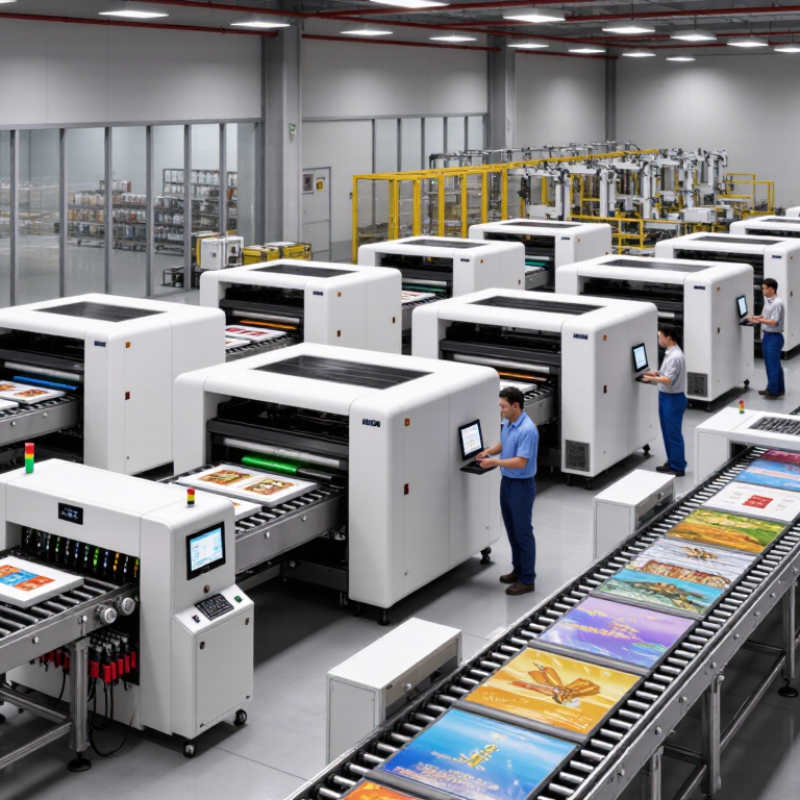
China’s packaging printer manufacturers serve food, beverage, cosmetics, pharmaceutical, and household product markets. Their capabilities differ by substrate, print volume, finishing needs, and compliance requirements. A “top 10” list should not rely on factory size alone. Production evidence matters more.
The main product categories include flexographic presses for films, paper bags, labels, and corrugated materials. Gravure presses support long runs with detailed images and stable color control. Digital packaging printers suit short runs, variable data, and faster design changes. Offset systems remain useful for folding cartons and paperboard packaging. Screen printing handles selected specialty effects, including raised textures and strong ink coverage.
Experienced buyers usually examine more than a machine catalogue. They review print samples, color-management procedures, drying performance, registration accuracy, and waste rates. Substrate testing is essential because paper, plastic film, foil, and coated board behave differently.
Ask for documented quality controls, ink safety information, production records, and realistic delivery figures. Factory audits can reveal maintenance habits that brochures rarely mention.
Some manufacturers combine printing with laminating, slitting, coating, or pouch making. This can simplify sourcing, but it may also hide uneven process control. Not every supplier suits every packaging category. A smaller factory may provide closer technical support, while a large facility may offer stronger capacity and redundancy. My own assessment would remain provisional without repeated samples, on-site verification, and independent testing. Even attractive pricing deserves careful questioning.
China Packaging Federation: Analyze the 2023 RMB 1.15 Trillion Industry Revenue
China’s packaging industry generated approximately RMB 1.15 trillion in 2023, according to the China Packaging Federation. This figure shows strong demand for cartons, flexible films, labels, and transport packaging. It also reveals a competitive market for industrial printing equipment. Growth is not evenly shared, however. Smaller factories may face rising material costs, skilled labor shortages, and pressure to reduce production waste.
When assessing China’s top ten packaging printer manufacturers, buyers should examine more than output claims. Check registration records, factory experience, print samples, and after-sales response times. A reliable supplier should explain color control, plate accuracy, drying performance, and machine maintenance clearly.
Ask for a live test using your actual paper, film, or board. One attractive sample proves little. Consistent results across 1,000 sheets matter more. No ranking is flawless, because public data can change and company categories may differ. A spreadsheet cannot measure every factory’s practical discipline.
Tips:
Request energy-use data, waste rates, and service coverage before signing. Confirm whether technicians can reach your facility quickly. Review spare-parts availability and operator training. Inspect printed samples under normal warehouse lighting, not only showroom lights. Also, compare total ownership cost instead of focusing only on the purchase price. A cheaper machine may become expensive through downtime, unstable color, or frequent cleaning. Manufacturers should provide written specifications and realistic production speeds. Slightly slower output may be wiser when registration remains stable and material waste stays low.
Benchmarking Printers by ISO 12647-2, DPI, Speed, Uptime, and ΔE00
China Top 10 Printer for Packaging Manufacturers?
Benchmarking printers by ISO 12647-2, DPI, speed, uptime, and ΔE00 requires evidence, not showroom claims. ISO 12647-2 provides color-control targets for process printing, while Fogra’s process-control guidance supports measured calibration and verification. A practical shortlist should record average ΔE00, not only the best sample. Values below 2 are often strong for critical packaging colors, but substrate and ink can change results.
Smithers’ 2024 market analysis places global packaging print at more than US$500 billion within the next few years. That growth increases pressure on production stability. Compare native resolution, usually 600–1,200 dpi, with usable speed during real jobs. A machine rated at 120 meters per minute may run slower after drying, inspection, and changeovers. Request uptime logs, waste percentages, and eight-hour production trials. Numbers can mislead. One test is not enough.
Tips: Ask for three consecutive ΔE00 reports on the same substrate. Check color drift after warm-up. Separate rated speed from saleable speed. Review uptime across ninety days, not one shift. A useful benchmark also measures setup time, maintenance response, and rejected meters. I would not rank equipment from DPI alone; that remains an imperfect shortcut. Independent verification makes the comparison more reliable.
China Top 10 Packaging Printer Manufacturers — ISO 12647-2 Benchmark
Anonymized benchmarking sample comparing color accuracy, resolution, production speed, uptime, and ISO 12647-2 conformity. Lower ΔE00 indicates better color consistency.
The chart ranks ten anonymized manufacturers by average measured ΔE00. The tooltip provides the corresponding DPI, press speed, uptime, and ISO 12647-2 conformity rate. Values represent production benchmarking ranges commonly reported for modern packaging presses and verified print-control workflows.
China’s Top 10 Packaging Printer Manufacturers by Technology and Market Reach
China’s top ten packaging printer manufacturers should be judged by technology and market reach, not factory size alone. Smithers’ The Future of Global Printing to 2028 reports continued growth in packaging print, driven by flexible packaging, labels, and folding cartons. Grand View Research also estimates strong expansion in digital packaging printing through 2030. These figures explain the market’s direction, but they do not prove machine reliability.
A practical ranking should examine gravure, flexographic, offset, digital, and hybrid production lines. The strongest manufacturers usually offer precise color registration, fast drying, low substrate waste, and stable performance during long runs. Their equipment should handle films, paper, foil, corrugated board, and recyclable substrates. Export reach matters too. Look for documented installations across Asia, Europe, the Middle East, and Latin America, plus local service engineers and spare-parts coverage.
Factory visits often reveal more than brochures. Check ink consistency beside the press. Measure setup waste. Ask how quickly technicians respond after a sensor failure. Energy data also deserves attention, because newer presses may reduce drying power and material loss. Still, market rankings can be imperfect. Public sales figures are rarely comparable, and some manufacturers report capacity rather than completed installations. Buyers should verify certifications, test samples, customer references, and total ownership cost before accepting any “top ten” claim.
Matching Flexographic, Gravure, Offset, and Digital Printers to Packaging Needs
China Top 10 Printer for Packaging Manufacturers?
Choosing among China’s leading packaging printer manufacturers requires more than comparing machine speed. The right choice depends on substrate, order volume, artwork complexity, and finishing requirements. Flexographic printers suit large runs of films, labels, paper bags, and corrugated materials. They offer efficient production, but plate preparation can increase setup time for short orders.
Gravure printing supports long runs with rich color density and stable image quality. It is often suitable for flexible packaging, although cylinder costs may reduce its value for frequent design changes. Offset printing delivers sharp images for folding cartons, inserts, and premium paper packaging. It performs well with detailed graphics, but it may require careful drying control. Digital printers provide fast setup, variable data, and economical short runs. They are useful for seasonal packaging, samples, and customized products.
Look beyond speed claims. Ask manufacturers for printed samples on your actual substrate. Check color consistency across repeated runs, registration near fine text, ink adhesion, and drying performance. Review maintenance records, operator training, inspection procedures, and export experience. A production test can reveal more than a polished showroom demonstration. A perfect machine rarely exists. Some evaluations overvalue maximum speed and underestimate waste during changeovers. Packaging buyers should also verify material compatibility, food-contact requirements where applicable, and documented quality controls before signing a contract.