

China Best Vietnam Packaging Suppliers for Global Buyers
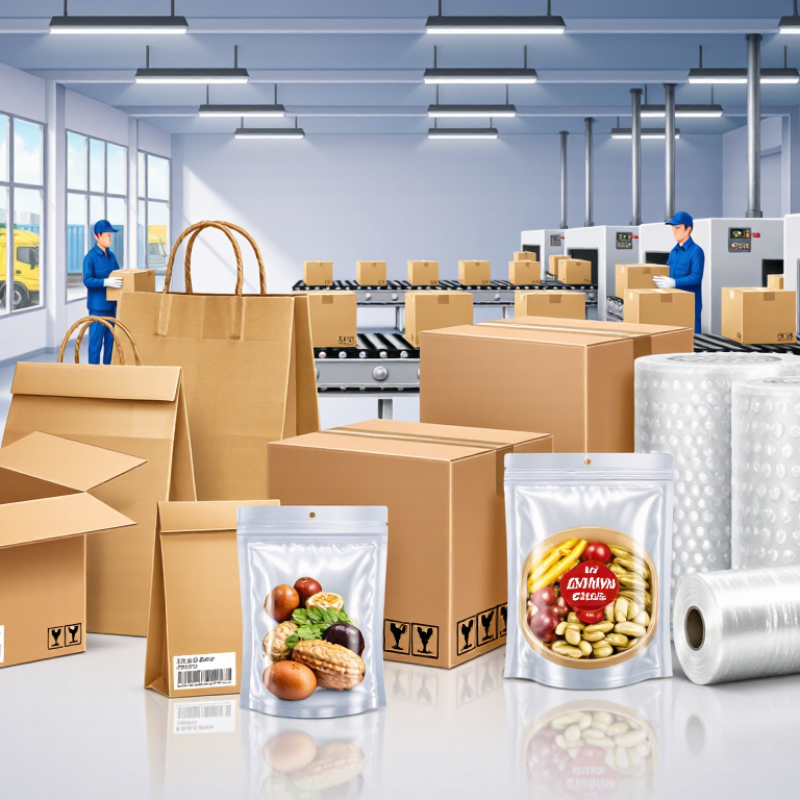
Global buyers are looking beyond low prices when choosing reliable vietnam packaging suppliers. They need stable quality, clear communication, and evidence that materials meet destination-market requirements. Vietnam has become an important production base for folding cartons, corrugated boxes, paper bags, flexible pouches, labels, and protective packaging. Its location also supports practical shipping routes across Asia and beyond.
This guide examines suppliers through an experienced buyer’s lens. It considers factory capability, printing accuracy, material consistency, production capacity, lead times, and export documentation. A supplier may show attractive samples, yet the larger production run can reveal color variation, weak seals, or uneven carton dimensions. Small details matter. A box that fits poorly can increase storage damage and transport costs.
Trust should be built with verifiable information, not polished promises. Buyers should request material specifications, test reports, product samples, quality-control procedures, and references from comparable projects. Independent factory audits can provide additional confidence, especially for food, cosmetics, pharmaceutical, and retail packaging. Certification claims also deserve careful checking. Standards such as FSC, ISO, or food-contact compliance may apply differently by product and destination.
No supplier is perfect. That deserves recognition. Production delays, design misunderstandings, and changing freight conditions can still occur. Strong partners respond quickly, document corrective actions, and communicate risks before shipment. This article introduces leading China-connected sourcing options and Vietnam-based manufacturers for global buyers. It focuses on practical comparison rather than exaggerated rankings. The goal is a clearer purchasing decision, supported by experience, technical review, and responsible supplier verification.
Vietnam Packaging Market Metrics: UN Comtrade HS 4819 and 3923 Data
Vietnam’s packaging market deserves close measurement before global buyers compare suppliers. UN Comtrade data provides a useful starting point through HS 4819 and HS 3923. HS 4819 covers paper and paperboard cartons, boxes, bags, and similar containers. HS 3923 covers plastic articles used for transporting or packing goods.
Buyers can review Vietnam’s annual export values, quantities, partner markets, and growth rates under both codes. China-related trade data can reveal sourcing links, material demand, and changing production patterns.
Unit values also help, although they are not direct product prices. A higher value may reflect better specifications, smaller shipment sizes, or changing product mixes. The data needs careful reading.
Practical research should compare several years, not one sudden increase. Check export records against supplier certificates, production photos, sample inspections, and delivery performance. HS codes are broad, so one code may combine very different packaging formats. This is a limitation. Still, the figures can identify credible supply regions and support more focused supplier interviews. Buyers should ask about recycled content, food-contact suitability where relevant, carton strength, plastic thickness, print consistency, and export documentation. Small details matter. Data alone cannot confirm factory capability.
China Supplier Screening: MOQ, Capacity, Lead Times, and ISO 9001 Proof
China Best Vietnam Packaging Suppliers for Global Buyers
China supplier screening should begin with evidence, not polished factory photos. The ISO Survey 2023 recorded about 1.26 million ISO 9001 certificates worldwide. Yet certification alone does not prove stable packaging quality. Request the certificate number, covered site, product scope, expiry date, and certification body. Call the body independently. Check whether the certificate covers manufacturing, not only office administration. A certificate can be genuine and still be insufficient.
For Vietnam-bound orders, compare MOQ with your launch volume. A practical screening range is 5,000 to 20,000 units for standard packaging, while custom printing may require more. Ask for monthly output, active production lines, shift patterns, and recent delivery records. Capacity claims need numbers. A supplier promising 500,000 units monthly should show machine lists and production schedules. Lead times commonly range from 20 to 45 days, excluding artwork approval and ocean transport. The World Bank’s Logistics Performance Index 2023 also shows that international shipment reliability remains uneven, so add buffer days.
Use a sample order before signing a large contract. Measure color consistency, sealing strength, dimensions, and carton protection. Keep inspection photos and batch codes. My own screening sheets sometimes overvalue low MOQ and overlook production bottlenecks. That is a costly mistake. Ask for corrective-action records, not just customer references. Require written tolerance limits, replacement terms, and inspection checkpoints. Small details matter.
Packaging Format Benchmark: Corrugated, Flexible, Rigid, and Paper Metrics
Packaging performance changes sharply across corrugated, flexible, rigid, and paper formats. Corrugated cases should be compared by ECT, burst strength, flute profile, basis weight, and compression after humidity exposure. A practical trial uses filled cartons stacked for 24 hours, not empty samples on a clean desk. Moisture can reduce stacking strength quickly.
Flexible packaging needs different metrics. Measure seal strength, puncture resistance, thickness, and oxygen and water-vapor transmission rates. Film samples may look identical, yet their barrier performance can differ under heat and storage pressure. Ask Vietnamese suppliers for test conditions, sampling dates, and lot traceability. A quotation without these records is incomplete.
Rigid packaging requires attention to caliper, impact resistance, closure torque, and dimensional stability. Paper formats depend on GSM, tear strength, stiffness, printability, and recycled-fiber consistency. I have seen low-cost paper perform well in dry rooms but curl near humid loading areas. That result was not a supplier failure alone; our storage simulation was too limited. Global buyers should request pilot production, inspect several batches, and compare landed cost against damage risk. The cheapest format is often not the most efficient one.
Export Compliance: FSC Claims, REACH Limits, Food Contact, and ISPM 15
Vietnam packaging suppliers serving global buyers must prove more than attractive pricing.
FSC’s 2023 Facts & Figures reported over 160 million hectares under certified forests worldwide. Yet an FSC claim needs a valid chain-of-custody certificate. The invoice, carton markings, and production records should match. A certificate alone is not proof.
REACH control requires careful material screening.
The European Chemicals Agency reported 241 Candidate List substances by June 2024. Packaging buyers should request recent declarations for inks, coatings, adhesives, and recycled fibers. Test reports should identify methods, dates, and laboratories. Generic “REACH compliant” letters are weak evidence.
Sometimes, suppliers cannot trace one adhesive batch. That deserves correction.
Food-contact packaging needs intended-use testing, migration limits, and production hygiene.
EU Regulation 1935/2004 and GMP Regulation 2023/2006 provide a practical compliance framework. For paper packaging, buyers should check mineral oils, heavy metals, and fluorinated substances. The results must reflect real food conditions, not only raw-material samples. This detail is often missed.
ISPM 15 applies to solid wood pallets, crates, and dunnage.
IPPC guidance requires approved treatment and a readable mark. Heat treatment commonly uses 56°C for 30 minutes at the wood core. Corrugated cartons normally do not require this mark. However, mixed shipments can create confusion at customs. Buyers should inspect pallet stamps before loading, not after arrival.
Mistakes happen. Reliable Vietnamese exporters keep batch photos, declarations, and test files together.
Global Buyer Scorecard: Landed Cost, Incoterms, QC, and Defect-Rate Targets
China Best Vietnam Packaging Suppliers for Global Buyers
A practical supplier scorecard must measure landed cost, not factory price. Vietnam ranked 43rd among 139 economies in the World Bank’s 2023 Logistics Performance Index, with a score of 3.3. That supports capable logistics, but port, inland, and documentation costs still require verification. Compare quotations under the same Incoterm. FOB, CIF, and DDP can create very different risk profiles.
Incoterms 2020 should define freight responsibility, insurance, customs clearance, and delivery risk. Ocean freight remains central, since UNCTAD reports that maritime transport carries over 80% of global merchandise trade by volume. Request a landed-cost worksheet with carton dimensions, port fees, duties, and currency assumptions. Small omissions become expensive at scale.
Quality targets need measurable evidence. Use ISO 2859-1 sampling plans, while separating critical, major, and minor defects. A workable starting point is zero critical defects, major defects below 1.5%, and minor defects below 4%. These are buyer targets, not automatic guarantees. Review pre-shipment inspection records, material certificates, barcode scans, and retained samples. Packaging reports from Smithers forecast continued global market growth, increasing pressure on consistency and traceability. A low unit price can still fail the scorecard. I would not trust a perfect sample alone. Production variation deserves a second inspection.
Related Posts
-
10 Best Vietnam Packaging Solutions for Your Business Success?
-

Top Vietnam Packaging Solutions for Global Buyers?
-

Top 10 Luxury Packaging Trends Every Buyer Should Know?
-

10 Essential Tips for Effective Marketing Boxes Packaging Strategies?
-

2026 Top Quality Packaging Suppliers for Global Buyers?
-

10 Best Luxury Product Packaging Suppliers Worldwide