

10 Best Delivery Packaging Options for Global Buyers
Global commerce now depends on small boxes surviving long, complex journeys. The Pitney Bowes Parcel Shipping Index 2023 recorded 161.8 billion parcels across 13 major markets in 2022. That volume turns delivery packaging into a practical business decision, not a decorative detail.
Packaging must protect products against compression, moisture, vibration, temperature changes, and repeated handling. It must also control material use, shipping weight, opening experience, and disposal requirements. The Ellen MacArthur Foundation continues to emphasize packaging systems designed for reuse, recycling, and waste reduction. Meanwhile, Smithers’ e-commerce packaging research identifies strong growth in online retail packaging, driven by global parcel demand and changing consumer expectations.
Packaging consultant Lisa McTigue Pierce has often described packaging as “the last physical touchpoint between a brand and its customer.” That point matters. A dented carton can damage trust before the buyer sees the product. A neatly fitted mailer, paper cushioning, and clear return instructions can create confidence within seconds.
No option is perfect.
The right choice depends on product fragility, destination, climate, delivery speed, and sustainability targets. Recycled corrugated boxes may perform well, but oversized formats waste space. Reusable mailers can reduce single-use materials, yet reverse logistics may complicate their value. This guide compares ten delivery packaging options for global buyers, using practical performance, cost, protection, and environmental considerations. Some recommendations may require testing. Real parcels are less predictable than spreadsheets.
Global Delivery Packaging: Key Selection Criteria
10 Best Delivery Packaging Options for Global Buyers
Global Delivery Packaging: Key Selection Criteria
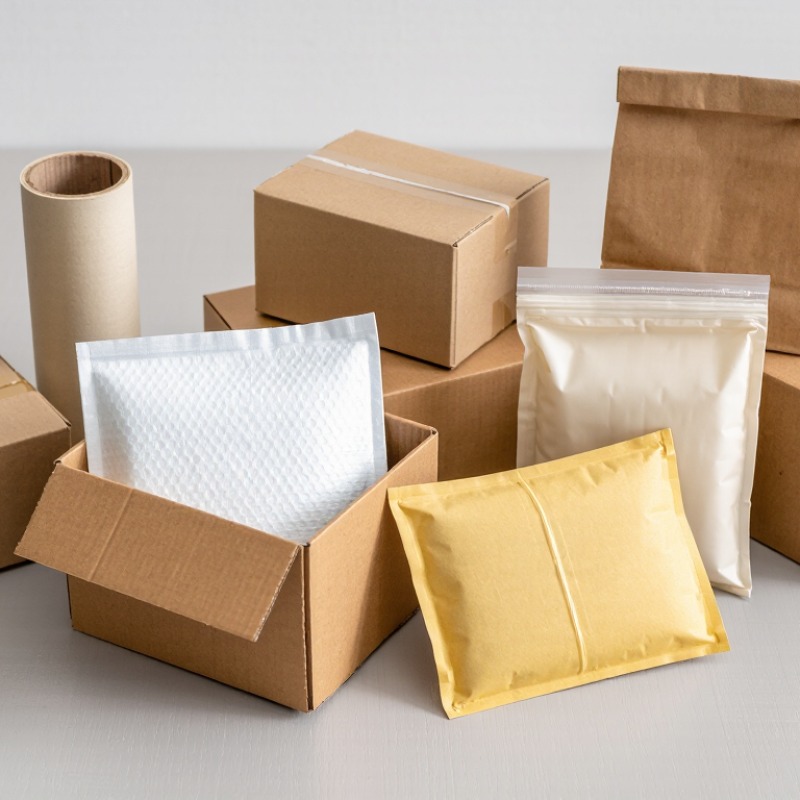
Choosing delivery packaging for global buyers starts with the product, route, and handling risks. A rigid corrugated carton suits many goods, while padded mailers work better for small, durable items. Fragile products may need molded inserts, corner protection, and internal spacing. Packaging should prevent movement without adding excessive weight.
Moisture resistance matters on ocean routes and during warehouse storage. Use sealed inner bags, desiccant packs, or coated cartons when humidity is likely. Check dimensional weight before finalizing the design. A large, light box can cost more than a compact package. I recommend testing drop resistance, compression strength, vibration, and temperature changes with realistic shipments.
Small details matter.
Materials should support local recycling systems and meet destination-market requirements. Avoid excessive layers that complicate disposal. Clear handling marks, accurate measurements, and durable address labels can reduce delays. Export documents must match the package contents and shipping data. This is basic, but errors still happen.
A practical packaging trial should include different carton sizes and closure methods. Record damage rates, packing time, shipping cost, and customer feedback. No package is perfect. A stronger box may protect better but create higher freight costs or more waste. That trade-off deserves review after every shipment, especially when routes, seasons, or product designs change.
10 Best Delivery Packaging Options for Global Buyers
Global Delivery Packaging: Key Selection Criteria
The composite score is a practical procurement benchmark based on product protection, dimensional fit, shipping weight, moisture resistance, recyclability, and tamper evidence. Packaging should be selected according to product fragility, destination climate, handling conditions, and local recycling infrastructure.
Corrugated Boxes for Versatile International Shipping
Corrugated boxes remain a practical choice for global buyers because they balance protection, weight, and cost. The outer liner resists abrasion, while the fluted middle layer cushions products during handling. Box strength depends on more than thickness. Edge crush strength, moisture exposure, and pallet stacking also matter.
A compact single-wall box suits books, samples, and small household goods. Double-wall construction handles heavier items or long transport routes. Custom inserts can keep glass containers, tools, or irregular products from shifting. However, oversized boxes waste space and raise freight charges. That mistake is common.
The Fibre Box Association reported a corrugated recovery rate above 90% in the United States in recent industry data. This supports corrugated packaging’s circular-material advantage, but recovery depends on local collection systems. Smithers’ global corrugated packaging research also identifies e-commerce and international distribution as major demand drivers. Buyers should still request test evidence, not rely on appearance alone. ASTM or ISTA-based distribution testing can evaluate vibration, compression, and drops. Humidity testing is especially important for sea freight. A dry warehouse box may soften inside a humid container.
For international shipping, choose a box that fits closely, seals consistently, and supports clear handling marks. Leave enough internal space for cushioning, but avoid unnecessary void fill. I have found that simple packaging often performs better when packing teams follow one repeatable method. Still, no box works everywhere. Product weight, route length, stacking pressure, and climate must shape the final specification.
Padded Mailers and Envelopes for Lightweight Products
For lightweight products, padded mailers and protective envelopes can reduce shipping bulk without sacrificing basic protection. They suit garments, books, accessories, samples, and small household items. Their flexible shape fits narrow parcels. This often lowers dimensional weight. Check the contents first. A soft mailer cannot replace a rigid carton for fragile glass or sharp edges. In warehouse trials, I press each packed envelope at several points. I also shake it gently. If the item shifts, the package needs better cushioning or a tighter fit.
A reliable mailer needs more than bubble padding. Look for a strong outer layer, consistent seams, and a dependable self-seal strip. Water-resistant material helps during wet loading areas and short outdoor transfers. It is not waterproof protection. For international delivery, leave room for a clear address label and required customs information. Keep labels flat and readable. Measure the packed item, not the product alone. Small size errors can affect postage and sorting. Use tracking when order value or customer expectations justify it.
Material choice also shapes the buyer’s experience. Paper-based envelopes may support easier recycling, but local recycling rules differ. Plastic mailers can resist moisture well, yet disposal is less straightforward in many regions. Ask suppliers for construction details and test samples before placing a large order. I have learned that attractive packaging can still fail at the adhesive seam. That mistake is easy to miss. Review returned parcels, record damage patterns, and adjust the format gradually. A padded envelope should protect the product, communicate care, and remain practical for real delivery conditions.
Crates, Pallets, and Wooden Cases for Heavy Cargo
10 Best Delivery Packaging Options for Global Buyers
Crates, Pallets, and Wooden Cases for Heavy Cargo
Heavy cargo needs packaging that controls movement, moisture, and handling shocks. Wooden crates suit machinery with irregular shapes and accessible loading points. Wooden cases offer stronger protection when dust, impact, or stacking pressure is a concern. Pallets work well for stable, flat-bottomed equipment moved by forklifts. The wrong choice creates hidden costs. A strong case can still fail when internal blocking is weak.
UNCTAD’s Review of Maritime Transport 2024 reported 2.4% growth in seaborne trade during 2023. More cargo movement means more transfers, waiting periods, and handling risks. The World Bank’s Logistics Performance Index 2023 also emphasizes shipment reliability, tracking, and delivery consistency. Packaging should support these goals. Use heat-treated wood compliant with ISPM 15 requirements for international shipments. Add corrosion protection, moisture barriers, corner guards, and clearly positioned lifting points.
In practice, I inspect the cargo’s center of gravity before selecting a pallet or case. Heavy motors often need bolting, not simple wrapping. Long parts may require reinforced crates with diagonal bracing. Shock indicators can reveal rough handling, but they cannot repair poor design. I have seen teams overbuild wooden boxes and still ignore forklift entry clearance. That mistake is expensive. Packaging calculations should consider gross weight, stacking limits, route conditions, and unloading equipment. Sometimes, a lighter crate is better. Sometimes, it is a false saving.
| Packaging Option | Typical Construction | Suitable Cargo | Indicative Load Range | Protection and Handling | Export and Shipping Considerations |
|---|---|---|---|---|---|
| Open wooden crate | Timber frame with spaced boards or battens | Large machinery, fabricated parts, and equipment that can tolerate exposure | About 500–5,000 kg, depending on design | Good structural support and forklift access; limited protection from dust, rain, and impact | Solid-wood components used in international shipments may need treatment and marking under ISPM 15 requirements |
| Closed wooden crate | Timber frame enclosed with plywood or solid-wood panels | Heavy machinery, spare parts, and cargo requiring additional enclosure | About 500–5,000 kg, depending on dimensions and construction | More protective than an open crate; can be fitted with blocking, bracing, and moisture barriers | Confirm gross dimensions, lifting points, and treatment requirements before dispatch |
| Heavy-duty wooden case | Rigid timber framework with plywood or lumber walls and a reinforced base | Precision equipment, high-value industrial goods, and dense cargo | About 500–10,000 kg, with engineering review for heavier loads | Enclosed protection; internal cushioning and securement can reduce movement and vibration | Use clear orientation, center-of-gravity, lifting, and handling marks where applicable |
| Plywood case | Engineered plywood panels attached to a timber frame or base | Components and machinery needing a lighter, enclosed shipping case | About 100–2,000 kg, depending on panel thickness and base design | Good enclosure with a relatively low tare weight; strength depends on construction and fastening | Check whether any solid-wood supports or skids require ISPM 15 treatment; plywood itself is processed wood |
| Timber pallet | Deck boards supported by stringers or blocks | Bagged, boxed, or crated goods handled by forklifts or pallet jacks | Commonly around 500–2,000 kg static working load; specifications vary | Efficient unitization and warehouse handling; does not enclose or weatherproof cargo | Specify pallet dimensions and entry direction; solid-wood pallets for export may require ISPM 15 compliance |
| Heavy-duty block pallet | Timber or engineered-wood deck supported by blocks for multi-side forklift entry | Dense machinery, industrial assemblies, and oversized unit loads | Often around 1,000–3,000 kg, subject to pallet design and load distribution | Provides robust support and easier forklift access; cargo should be strapped or blocked securely | Confirm the pallet’s rated capacity, overall height, and compatibility with handling equipment |
| Collapsible wooden crate | Reusable timber or plywood panels joined with removable or folding fittings | Returnable equipment, replacement parts, and regular shipping lanes | About 200–2,000 kg, depending on the base and panels | Can be collapsed for return transport; inspect joints and fittings before each reuse | Plan reverse logistics and verify that the assembled crate meets the shipment’s protection needs |
| Steel-framed wooden crate | Steel frame with timber or plywood panels and a reinforced load-bearing base | Very heavy machinery, large castings, and concentrated loads | About 2,000–20,000 kg or more when custom-engineered | High structural rigidity and strong lifting support; higher tare weight than many alternatives | Require documented lifting points and a design suited to the cargo weight and transport mode |
| Plastic pallet | Moulded plastic deck, often with runners or blocks | Packaged goods and components needing repeatable dimensions or hygienic handling | Commonly around 500–1,500 kg dynamic load; ratings vary by model and conditions | Moisture-resistant and reusable; may be less suitable than a custom base for concentrated heavy loads | Check temperature limits, rack suitability, and whether the pallet’s rated capacity matches the actual load |
| Metal stillage or transport rack | Welded steel or aluminium frame, sometimes stackable or collapsible | Dense, irregular, or returnable industrial components | About 500–5,000 kg, with capacity determined by frame design | Durable and suitable for repeated handling; open sides may require wrapping or added panels | Account for tare weight, stacking limits, corrosion protection, and return-shipping arrangements |
| Load figures are indicative examples, not universal ratings. Actual safe working capacity depends on construction, load distribution, transport vibration, stacking, handling equipment, and applicable regulations. Confirm packaging specifications with the packer and carrier before shipment. For international shipments containing regulated solid-wood packaging, check current ISPM 15 requirements and destination-country rules. | |||||
Sustainable and Temperature-Controlled Packaging Options
10 Best Delivery Packaging Options for Global Buyers
Sustainable and Temperature-Controlled Packaging Options
Global delivery packaging must protect products without creating unnecessary waste. Recycled corrugated cartons remain practical for many shipments, especially when paired with paper honeycomb padding or molded fiber inserts. These materials cushion fragile goods and often fit existing recycling systems. Right-sizing matters. An oversized box can increase void fill, shipping volume, and damage risk.
For temperature-sensitive goods, insulated paper liners, wool-fiber panels, cellulose insulation, and reusable thermal totes offer lower-waste alternatives to conventional foam. Gel packs and phase-change packs can maintain a narrower temperature range when selected for the product and route. Always test the pack-out under realistic conditions, including airport delays, weekend storage, and summer heat. A package that performs well for 24 hours may fail during a 72-hour journey.
Humidity, customs handling, and local recycling access also influence the best choice. Water-activated paper tape can reduce mixed materials, while reusable crates may suit frequent business-to-business deliveries. However, reusable systems need reverse logistics, cleaning, and reliable return rates. Otherwise, their environmental benefit becomes uncertain. I have seen teams choose compostable insulation too quickly; it may require industrial composting that many buyers cannot access. Clear disposal instructions, temperature indicators, and recorded validation data make packaging decisions more credible for global customers.
Related Posts
-
How to Choose the Right Boxes and Packaging for Your Business Needs in 2025
-

Top Trends in Printing and Packaging You Need to Know for 2023
-

10 Essential Tips for Effective Marketing Boxes Packaging Strategies?
-

10 Best Corrugated Packaging Solutions for Your Business Needs?
-

How to Choose Quality Packaging for Your Products in 2026?
-

What is Card Box Packaging and Its Benefits for Businesses?