What Is Creating Packaging and How Does It Work?
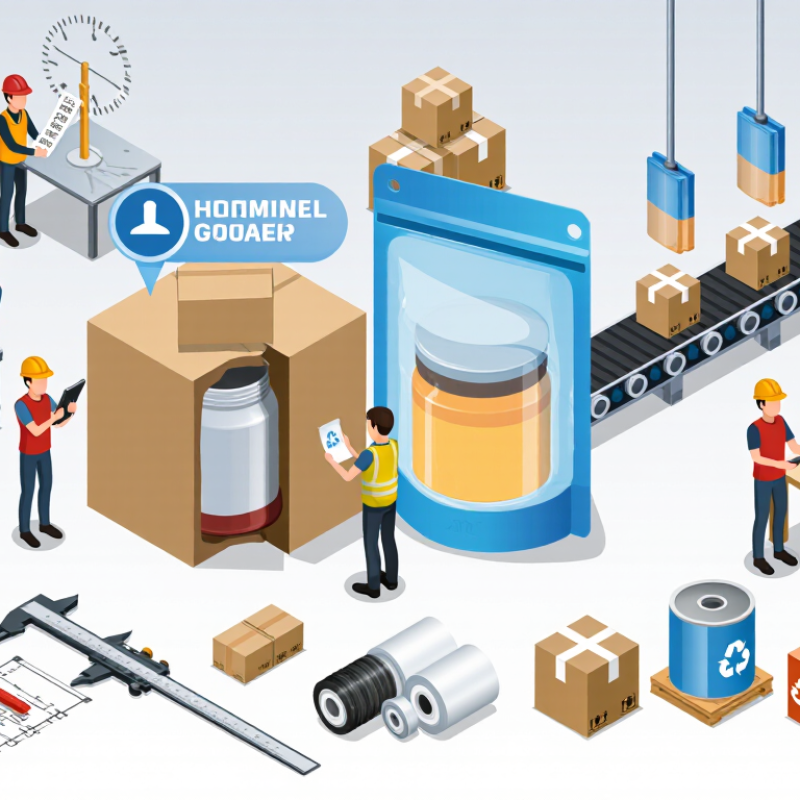
Creating packaging is the process of turning a product idea into a physical, useful, and recognizable package. It combines research, structural design, materials, graphics, testing, and production planning. A successful package must protect its contents, communicate quickly, and feel comfortable in the customer’s hands. It should also suit the product’s storage, transport, and retail environment.
Lars Wallentin, former head of packaging design at Nestlé, expressed this idea simply: “The package is the product.” His statement highlights packaging’s practical importance. A glass jar, for example, needs a secure closure, readable labeling, and enough strength for shipping. A flexible pouch requires careful seal testing and precise material selection. Creating packaging is not only about attractive colors or clever shapes. It is a measured process involving engineers, designers, manufacturers, and quality teams.
The work usually begins with product requirements and user research. Teams then develop concepts, build prototypes, and test opening, stacking, handling, and protection. Small details matter. A weak corner can collapse during transport. A tiny label can become difficult to read under store lighting. Sustainability also requires honest evaluation, not vague claims. Recyclability depends on local systems, material choices, and correct disposal information.
There is no perfect package. Trade-offs remain. A lighter design may reduce material use but need stronger structure. A premium finish may improve appearance but complicate recycling. Good creating packaging balances performance, cost, usability, brand identity, and responsible decision-making.
What Creating Packaging Means and Why It Matters
What Is Creating Packaging and How Does It Work?
What Creating Packaging Means and Why It Matters
Creating packaging means turning a product’s needs into a protective, usable, and manufacturable system. It includes material selection, structure, graphics, sealing, testing, and end-of-life planning. A package must survive vibration, drops, humidity, and warehouse pressure. It must also open easily in a real kitchen, not only in a design studio.
The work begins with evidence. Engineers may run compression tests, drop tests, and seal-strength checks before approving a final structure. ISO 14040 and ISO 14044 provide recognized frameworks for life-cycle assessment. These methods help teams compare material use, production energy, transport, and disposal impacts.
The OECD’s Global Plastics Outlook reports that packaging creates about 40% of global plastic waste. That figure makes packaging decisions difficult to ignore.
Packaging matters because it protects products and shapes everyday behavior. Smithers projects the global sustainable packaging market will reach about $423.7 billion by 2028. Yet “sustainable” should not become a vague label. A lighter package is not automatically better if it increases breakage or food waste. That assumption needs testing.
In practice, the strongest design may use less material, clearer disposal instructions, and a structure that runs reliably on existing equipment. Small details matter: a dry grip, a clean tear line, and a closure that does not leak. The process is still imperfect. Data can guide decisions, but local recycling systems and consumer habits can change the result.
How Packaging Design Begins with Product and User Research
What Is Creating Packaging and How Does It Work?
Creating packaging is a research-led process, not just a search for attractive colors. Designers begin by studying the product, its users, and the place where it will be handled. They may observe shoppers comparing packages on a crowded shelf. They may also interview people opening, carrying, storing, or disposing of the item. These details reveal practical problems that a mood board cannot show. A box can look elegant but still be difficult to open.
Product research examines size, weight, ingredients, fragility, shelf life, and transport conditions. User research explores habits, expectations, accessibility needs, and moments of confusion. A designer might test whether a small instruction is readable under kitchen lighting. Another test may check if the seal opens without tearing the contents. Early prototypes make these issues visible. Some ideas fail. That is useful evidence, although teams sometimes protect attractive concepts for too long.
Tips: Watch real users, not imagined users. Test packaging with full-size samples and ordinary lighting. Record hesitation, spills, awkward grips, and questions. Compare several versions, then document why one performs better. Research should also include material impact and disposal instructions. Claims must be checked against reliable technical sources and applicable packaging requirements. I once underestimated how much a glossy surface showed fingerprints; the mistake changed the final material choice. Perfect predictions are rare. Careful observation is more dependable.
How Materials, Structures, and Visual Elements Are Selected
What Is Creating Packaging and How Does It Work?
Packaging creation is the process of turning product requirements into a safe, useful, and recognizable package. Teams study the product’s weight, sensitivity, storage conditions, and expected handling. A glass container may need strong cushioning, while a paper box may need moisture resistance. That choice matters.
Material selection should balance protection, cost, appearance, and disposal conditions. Paperboard often supports crisp printing and easy folding. Flexible films can reduce weight but may complicate recycling in some areas. Packaging engineers test compression, vibration, drop resistance, and ink adhesion before approving a design. A practical drop test can reveal weak corners within seconds. A neat mock-up can still fail.
The structure controls how people open, carry, stack, and store the package. Visual elements then communicate information through hierarchy. Contrast improves readability, while typography should remain clear under uneven lighting. Color can signal function, but it should not replace essential text. Small icons need enough space around them. Product images must match the actual contents, or trust suffers.
In design reviews, teams compare prototypes instead of trusting screens alone. A package that looks elegant on a monitor may feel awkward in the hand. Some choices also remain debatable. Extra layers may improve protection but increase material use. That weakness deserves honest review.
What Is Creating Packaging and How Does It Work?
Packaging is created by balancing material performance, structural efficiency, recovery potential, and visual communication. The chart compares U.S. packaging generation with the amount recovered for recycling by material in 2018.
Key insight: Paper and paperboard represented the largest packaging material category by weight, while metals achieved a relatively high recovery level. Plastic packaging had the lowest recovery share among the materials shown, demonstrating why material selection and end-of-life design are important.
Source: U.S. Environmental Protection Agency, Advancing Sustainable Materials Management: 2018 Fact Sheet. Values are measured in million U.S. short tons.
How Packaging Is Prototyped, Tested, and Improved
Creating packaging is a cycle of making, testing, and correcting. Designers begin with product measurements, handling risks, shelf conditions, and user needs. A rough prototype may use paper, foam, or 3D-printed parts. It should reveal problems early. Does the lid close smoothly? Can a worker pack it without force? Small failures matter.
Testing then becomes more realistic. Teams check compression, vibration, drops, humidity, temperature, sealing strength, and material compatibility. Transport simulations can expose crushed corners or loose inserts.
The World Bank’s What a Waste 2.0 report estimated 2.01 billion tonnes of municipal waste in 2016, potentially rising to 3.40 billion tonnes by 2050. Packaging designers cannot treat waste as an afterthought. Eurostat reported 188.7 kilograms of packaging waste per EU resident in 2021. That figure makes material reduction a practical design target.
Tips: Build several prototypes, not one. Test the weakest point first. Measure material use by function, not appearance. Record every failure with photos and test conditions. Then revise one variable at a time. This keeps results understandable.
The improvement stage is rarely perfect. A lighter package may lose stacking strength. A tighter seal may slow production. Recycled content can change stiffness, color, or moisture resistance. Good teams document these trade-offs and retest them against recognized procedures, such as ISTA transport protocols. Customer handling trials also matter. Laboratory success can still fail beside a busy checkout counter. That gap deserves attention.
How Packaging Is Manufactured, Filled, and Distributed
Creating packaging is a controlled chain of material selection, forming, filling, and delivery. It begins with paper, glass, metal, or polymer sheets. Converters print, coat, cut, and shape these materials. Rigid containers may use heat, pressure, or moulds. Flexible packs often require precise sealing temperatures.
The OECD’s Global Plastics Outlook reports that packaging uses about 40% of global plastic production. That figure changes how engineers design thickness, closures, and recyclable structures. Filling follows manufacturing. Automated systems measure products, remove excess air, and seal each unit. Checkweighers then reject inconsistent packs. Clean surfaces matter. A small sealing defect can ruin an entire case.
Distribution adds another layer of engineering. Finished packs move through cartons, pallets, warehouses, and trucks. They need enough strength for stacking, but excessive material increases cost and waste. The World Bank’s What a Waste 2.0 estimates 2.01 billion tonnes of municipal solid waste were generated globally in 2016. Packaging is only part of that stream, yet it appears everywhere in daily handling. In the United States, the EPA reported 82.2 million tons of containers and packaging in municipal solid waste during 2018. That number deserves attention. Packaging lines can be fast, but they are not flawless. Misaligned labels, weak seals, and damaged corners still occur. Better inspection helps, although prevention remains less wasteful than correction.
| Process Stage | Primary Materials or Inputs | How the Process Works | Typical Equipment | Key Data and Common Ranges | Quality and Safety Checks | Typical Output |
|---|---|---|---|---|---|---|
| 1. Material Selection | Paperboard, corrugated fiberboard, glass, steel, aluminum, rigid plastic, flexible plastic film, or compostable fiber | Packaging designers select a material according to product protection, weight, shelf life, moisture resistance, temperature exposure, recyclability, and required barrier performance. | Material testing instruments, thickness gauges, moisture meters, barrier-performance testers | Common considerations: material thickness, tensile strength, compression strength, oxygen transmission, water-vapor transmission, and product-contact suitability | Food-contact compliance, chemical compatibility, migration testing, dimensional consistency, and verification of recycled or renewable content claims | A documented material specification and approved packaging design |
| 2. Converting and Forming | Sheet, roll stock, resin pellets, glass batch, metal coil, or molded fiber pulp | Raw material is cut, printed, coated, folded, thermoformed, injection molded, blow molded, drawn, pressed, or shaped into a container or pack component. | Die cutters, folder-gluers, printing presses, extrusion lines, thermoformers, injection molding machines, glass-forming machines, and can-making lines | Typical controls: dimensions, wall thickness, seal area, closure fit, print registration, flatness, and forming temperature | Visual inspection, dimensional sampling, leak testing, seal-strength testing, and automated camera inspection | Empty cartons, pouches, trays, bottles, jars, cans, tubs, caps, labels, or protective inserts |
| 3. Surface Treatment and Decoration | Inks, coatings, adhesives, varnishes, laminates, labels, and protective finishes | Graphics and functional coatings are applied to improve identification, appearance, scuff resistance, moisture resistance, light protection, or seal performance. | Flexographic, gravure, offset, digital, or screen-printing systems; laminators; coating units; curing ovens | Typical controls: color consistency, coating weight, drying or curing time, barcode readability, and adhesive bond strength | Ink adhesion, rub resistance, odor testing, barcode verification, artwork approval, and checking that product-contact surfaces remain suitable | Printed, coated, laminated, labeled, or otherwise identified packaging components |
| 4. Component Assembly | Container bodies, closures, liners, labels, handles, films, seals, and protective parts | Separate components are joined by gluing, heat sealing, ultrasonic welding, crimping, snapping, screwing, or mechanical fitting. | Assembly machines, capping machines, heat sealers, ultrasonic welders, and automated inspection systems | Typical controls: closure torque, seal temperature, dwell time, pressure, alignment, and component presence | Seal integrity, tamper evidence, opening force, closure fit, contamination control, and correct component combination | Finished empty packages ready for filling or shipment to a filling facility |
| 5. Product Preparation | Food, beverage, medicine, cosmetics, household products, industrial goods, or other contents | The product is mixed, processed, heated, cooled, filtered, sterilized, or otherwise prepared according to its formulation and packaging requirements. | Mixing tanks, pumps, filters, heat exchangers, sterilizers, weighing systems, and temperature-control equipment | Typical controls: weight or volume, temperature, viscosity, pH, particle size, moisture, and microbiological limits where applicable | Batch identification, sanitation records, ingredient or material traceability, process validation, and laboratory testing | A controlled product batch ready for filling |
| 6. Filling and Dosing | Prepared product and empty packaging components | Measured quantities are dispensed into containers or formed packs using volumetric, gravimetric, piston, pump, auger, or time-pressure filling methods. | Liquid fillers, powder fillers, piston fillers, auger fillers, multi-head weighers, and form-fill-seal machines | Typical controls: fill weight or volume, line speed, product temperature, container position, and allowable fill variation | Checkweighing, fill-level inspection, foreign-material detection, container cleanliness, and automated rejection of nonconforming units | Individual filled units with a measured quantity of product |
| 7. Sealing and Closure | Lids, caps, induction seals, heat-seal films, adhesive seals, or welded closures | The package is closed to prevent leakage, contamination, moisture gain or loss, oxidation, and unauthorized opening. | Cappers, induction sealers, heat sealers, lidding machines, crimpers, and vacuum or gas-flush systems | Typical controls: seal temperature, pressure, dwell time, torque, vacuum level, and protective-gas concentration when used | Leak testing, seal-strength testing, torque verification, tamper-evidence inspection, and package integrity testing | Sealed product units suitable for labeling and secondary packaging |
| 8. Coding and Labeling | Labels, ink, thermal-transfer ribbon, laser-marking data, batch information, and regulatory text | Variable information such as production date, lot code, expiry or best-before date, serial number, and logistics codes is applied to the pack. | Inkjet printers, laser coders, thermal-transfer printers, label applicators, and vision systems | Typical controls: code contrast, print position, character accuracy, barcode quality, and data synchronization | Vision inspection, barcode scanning, date-code verification, label reconciliation, and traceability checks | Identified and traceable finished consumer or industrial packages |
| 9. Secondary and Tertiary Packaging | Cartons, cases, trays, shrink film, stretch film, pallets, corner boards, and strapping | Individual units are grouped into shipping configurations to improve handling, protect products, and support warehouse and transport operations. | Case packers, cartoners, shrink wrappers, palletizers, stretch wrappers, and strapping machines | Typical controls: units per case, case dimensions, pallet pattern, total load height, and load weight | Case count, pallet stability, compression resistance, label accuracy, and transport-simulation testing | Cases, bundles, and palletized loads ready for storage or distribution |
| 10. Warehousing | Palletized finished goods, handling equipment, storage locations, and inventory records | Finished packages are received, scanned, stored, rotated, and picked according to inventory and product-life requirements. | Racking systems, forklifts, conveyors, barcode scanners, warehouse-management systems, and temperature-control equipment | Typical controls: inventory accuracy, storage temperature, humidity, stock rotation, pallet condition, and order-picking rate | First-expired-first-out or first-in-first-out controls, damage inspections, lot traceability, and security checks | Verified orders assembled for shipment |
| 11. Distribution and Transport | Cases, pallets, shipping documents, handling labels, and transport vehicles | Orders move through distribution centers, carriers, wholesalers, retailers, or direct delivery channels until they reach the final user or point of sale. | Loading systems, conveyors, delivery vehicles, rail or ocean containers, tracking systems, and handling equipment | Typical controls: shipment weight, cube utilization, delivery time, temperature exposure, shock, vibration, and route status | Load restraint, transport documentation, scan events, condition checks, temperature records when required, and proof of delivery | Packaging delivered intact to the intended destination |
| 12. End-of-Life Management | Used cartons, containers, films, closures, labels, and residual product | Packaging is reused, recycled, composted where suitable, recovered for energy, or disposed of according to local infrastructure and regulations. | Collection systems, sorting equipment, balers, shredders, washing systems, reprocessors, and composting facilities | Typical controls: material separation, contamination level, recovery rate, recycled yield, and weight by material stream | Correct disposal instructions, restricted-substance compliance, material identification, and verification of recycling or compostability claims | Recovered material, reusable packaging, treated residuals, or documented waste streams |
Related Posts
-
2026 Top Quality Packaging Suppliers for Global Buyers?
-
How to Achieve Better Packaging for Your Products?
-
How to Choose the Right Boxes and Packaging for Your Business Needs in 2025
-
2026 Best Ways to Make Packaging More Sustainable?
-
Top 10 Benefits of Green Packaging for Global Buyers?
-
What is Card Box Packaging and Its Benefits for Businesses?